


Decoding a Dried Cannabis Label
- Kat Ziger
- Apr 11, 2023
- 3 min read

Updated: Apr 11, 2023
Cannabis labels are chock-full of important information that can inform the way you consume the product. From cannabinoids, lineage, warnings, etc., every part of a label is there to serve a purpose and help you as a consumer! Let's deconstruct a dried cannabis label.
THC & CBD
We’ll start with the first thing that every cannabis consumer likely looks at on the front of their newly purchased product: THC and CBD content! If you want to learn more about these cannabinoids, we have an article here.
These cannabinoids must be displayed on your label in milligrams per gram (as set out by Health Canada). On your label you’ll see THC, and total THC/CBD (both listed in mg/g). THC alone refers to the amount of THC in a product before it is decarboxylated, the process of heating the cannabis to at least 95 degrees Celsius - in other words, the amount of THC/CBD you would be consuming if you were to say, eat the whole bag of dried flower like a bag of chips (we do not recommend this).

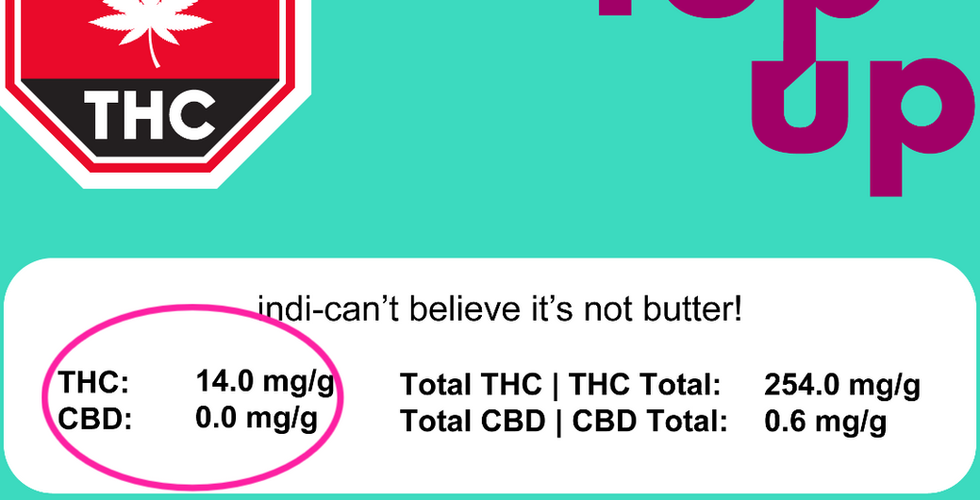


Total THC/CBD however, refers to the amount of the cannabinoids that become bioavailable (that means that your body can use them) after decarboxylation, which occurs naturally when you smoke or vape dried cannabis! You can also decarboxylate your cannabis in a number of other ways for other methods of consumption, for example in the oven to prepare it for use in edibles.
Pro tip: to convert these numbers into percentages, simply move the decimal point over one space to the left! A Total THC of 254.0 mg/g becomes 25.4%.
Now on to the back of the bag!

Terpenes
Terpenes are becoming more and more present on labels. We love this! Generally labels will display the top 5 terpenes found on the COA (certificate of analysis, the document from lab testing), and the total percentage of terpenes.
The top 5 terpenes will make up the bulk of that percentage and will be responsible for the flavour and aroma of the strain. Terpenes are known to have varying effects, which can contribute to how the strain makes a person feel. Taking a look at the terpenes present, as well as their total volume, can be a great way to learn about what to expect from a strain!
Packaged on date
The packaging must list the date that the product was packaged, this is not the date of harvest. The length of time from harvest to packaging can vary considerably depending on how the producer chooses to dry and age their products. Some producers may choose to share this date, but it is not mandatory and offers limited information when not paired with detailed information regarding the aging and bulk storage processes undertaken by the producer.
Dried flower includes no expiration dates, however the best before date is generally understood to be 365 days after the packaged on date and retailers will rarely sell product that has been packaged for more than 9 months. Over time, even with proper storage, the quality of dried cannabis will degrade resulting in lessened smell/taste, harsher burning and a less desirable experience.
Lot Number
The lot number is an identifier assigned to the product by the Licensed Producer. One lot number is assigned to cannabis of the same strain which has been grown, harvested and most importantly tested together. When cannabis is received by an LP who did not grow it, a new lot number is assigned to that cannabis by the receiving LP and exclusively used to identify it. The lot number is basically a serial number that allows for the Licensed Producer to keep track of their cannabis, and ensures if there is ever an issue with the cannabis that it can be easily tracked and recalled. Not exciting, but important for safety!
Net Weight
The net weight is simple! It refers to the weight of the cannabis at the time of packaging. So on our packages you’ll always see 2 grams!
You’ll also find a customer care email and number that goes directly to the Licensed Producer who packaged your product, a barcode, some extra child safety warnings, as well as storage recommendations.
Additionally, the back of the package is where a lot of brands choose to add extra (not Health Canada) required information. This is where we put terpenes, flavours, vibes, and lineage!
If you have any more questions that might help you to understand cannabis labeling a bit better, drop them below!
Happy high!

